Spain and Portugal were thrown into chaos on Monday after a massive, unexplained power outage left millions without electricity, disrupted transport, and forced both governments to declare states of emergency. The blackout hit the entire Iberian Peninsula and even parts of southern France just after midday, according to Portugal’s national grid operator, Redes Energéticas Nacionais (REN). While power was gradually being restored by evening, authorities were still in the dark about what caused the sudden outage. In cities like Madrid, Lisbon, Barcelona, and Seville, traffic lights went out, subway trains stopped mid-journey, and airports descended into confusion. Madrid’s roads quickly became clogged as drivers, without traffic signals, struggled to navigate intersections. “It was like a jungle,” said Luis Ibáñez Jiménez, who found himself dodging a massive bus in the chaos.
Spain’s Interior Ministry quickly declared a state of emergency in several regions, including Madrid, while Portugal’s Prime Minister Luis Montenegro announced an energy crisis after an emergency cabinet meeting. Restoring the grid, REN warned, would be a “complex operation.”



By Monday night, around half of Spain’s power needs were being met again, according to Environment Minister Sara Aagesen. Social media showed scenes of people cheering in Portuguese neighborhoods as lights flickered back on.
Meanwhile, officials urged citizens to stay off the roads and conserve emergency services for urgent cases only. Madrid’s mayor advised residents to avoid unnecessary movement, while local leaders called for military support to manage the situation.
While cyberattacks were initially feared, European Council President and former Portuguese Prime Minister Antonio Costa said there were “no indications” of hacking. Portuguese authorities pointed fingers at Spain, suggesting the outage likely originated there. Portugal, which depends heavily on importing Spanish electricity during the morning hours, was left particularly vulnerable.






The blackout hit the heart of southern Europe hard. Major hubs like Madrid and Barcelona – among the busiest airports in Europe – saw severe disruptions. In Lisbon’s Humberto Delgado Airport, passengers stood in long lines in the dark, with no air conditioning or running water, and shops accepting only cash.
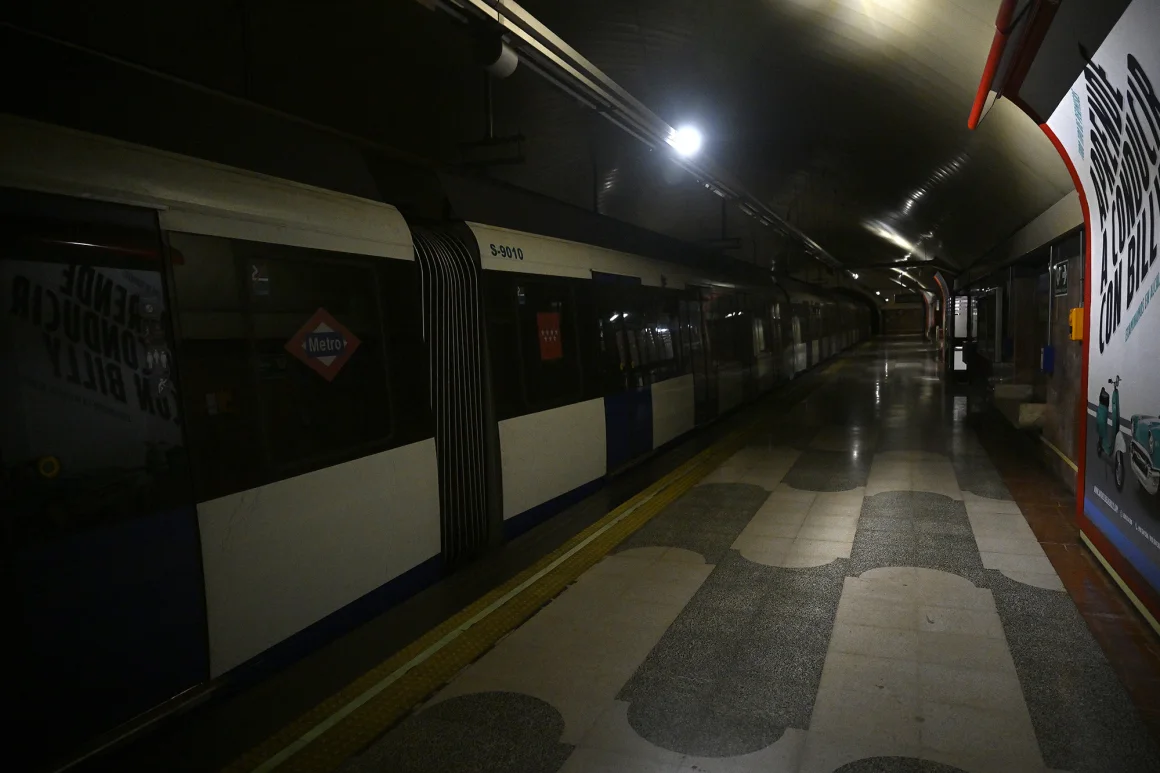
Train services were suspended across Spain, and Madrid’s metro network ground to a halt, with passengers evacuated from darkened tunnels. Across cities, supermarkets and restaurants shuttered their doors, and firefighters carried out over 170 rescue operations in stuck elevators.
Hospitals and emergency services switched to backup generators, and nuclear sites in Spain were confirmed safe. Still, authorities warned that the full recovery would take time, with Spain’s transportation ministry announcing that medium and long-distance trains would not resume until at least Tuesday.
Even sporting events weren’t spared – matches at the Madrid Open tennis tournament were suspended as the lights went out.
Though some areas of southern France near the Spanish border experienced brief, minor outages, the real impact was felt on the Iberian Peninsula, where tens of millions spent the day asking the same questions: when will power return, and what exactly went wrong?
As power steadily comes back, authorities are bracing for days of cleanup and major backlogs, especially at airports where travelers face significant delays.